A bicycle hub specification sheet contains essential information about wheel compatibility, drivetrain interfaces, and mechanical design. However, identifying the correct hub requires more than comparing dimensions or engagement numbers.
For bicycle brands, wheelset manufacturers, and OEM buyers, understanding these specifications helps prevent assembly errors, reduce sample revisions, and select suitable components for production.
This guide explains how to read bicycle hub specifications and which details matter most when sourcing hubs for professional wheel projects.
1. Start with the Axle Standard and Hub Spacing
Axle specifications determine whether a hub can fit the intended frame or fork.
For example, 15×110mm typically describes a front thru-axle hub with a 15mm axle interface and 110mm hub spacing. Similarly, 12×148mm identifies a common rear Boost MTB configuration.
Common specifications include:
| Hub Standard | Typical Application |
|---|---|
| 12×100mm Front | Road and gravel disc wheels |
| 12×142mm Rear | Road and gravel disc wheels |
| 15×100mm Front | Non-Boost MTB |
| 12×142mm Rear | Non-Boost MTB |
| 15×110mm Front | Boost MTB |
| 12×148mm Rear | Boost MTB |
| 9×100mm / 10×135mm QR | Traditional quick-release systems |
OEM Tip: Always verify axle type, mounting interface, and hub spacing together. Two hubs with similar dimensions are not necessarily interchangeable.
2. Check Freehub Body Compatibility
The freehub body determines which cassette interfaces can be installed on a rear hub.
Common standards include:
- Shimano HG: Used by many Shimano and compatible cassette systems.
- Shimano Micro Spline (MS): Commonly used with Shimano 12-speed MTB cassettes.
- SRAM XD: Designed for compatible SRAM MTB cassettes.
- SRAM XDR: Used for compatible SRAM road and gravel drivetrains.
- Campagnolo: Requires the appropriate Campagnolo freehub interface.
Freehub selection should be based on the exact cassette model rather than drivetrain speed alone.
For wheel manufacturers supplying multiple markets, interchangeable freehub options can simplify inventory management and product development.
3. Understand Spoke Hole Count and Spoke Type
Spoke specifications directly affect wheel assembly compatibility.
A designation such as 32H means the hub has 32 spoke holes. The rim must have a matching spoke count.
Common configurations include 24H, 28H, 32H, and 36H.
Spoke design is equally important:
- J-Bend: Uses conventional spokes with bent heads.
- Straight-Pull: Uses spokes without traditional J-bends and requires compatible spoke interfaces.
- Carbon Spoke: Requires a specifically designed hub and spoke connection system.
Some performance wheelsets use asymmetric spoke patterns, such as 2:1 lacing, to address spoke tension distribution.
OEM Tip: Confirm spoke hole count, hole geometry, flange dimensions, and the intended lacing pattern before approving a wheel design.
4. Identify the Brake Mounting Standard
Disc brake hubs commonly use two rotor interfaces:
Center Lock: Uses a splined rotor interface secured with a lockring.
6-Bolt: Uses six bolts to secure the rotor to the hub.
Both are established standards, but they require compatible rotor mounting systems.
For OEM projects, brake interface selection should match the approved rotor specification and the intended wheel assembly process.
5. Read the Engagement System Specifications
Rear hub engagement determines how quickly pedaling input begins driving the wheel after free movement.
Two common mechanisms are pawl and ratchet systems.
Specifications may include:
- 36T / 54T: Ratchet tooth counts.
- 80T: An 80-tooth ratchet configuration.
- POE: Points of engagement per complete revolution.
- Pawl Count: Number of pawls in the engagement mechanism.
For example, a 54-point engagement system has a nominal engagement angle of approximately 6.67°.
However, tooth count and POE are not always interchangeable, particularly in multi-pawl systems.
Higher engagement frequency can improve responsiveness, but durability, load distribution, and maintenance requirements should also be evaluated.
6. Evaluate Materials, Bearings, and Weight
Material specifications indicate how major hub components are manufactured.
Common examples include:
- AL6061-T6: Frequently used for hub shells.
- AL7075: Often selected for high-strength axles and freehub components.
- Sealed Cartridge Bearings: Used to support rotation while helping protect internal bearing surfaces.
Bearing quality, sealing design, machining tolerances, and serviceability influence long-term reliability.
When comparing weight, confirm whether the stated value represents a single hub or complete hubset and which components are included.
The lightest option is not necessarily the best choice for every application.
7. Example: Reading a Real MTB Hub Specification
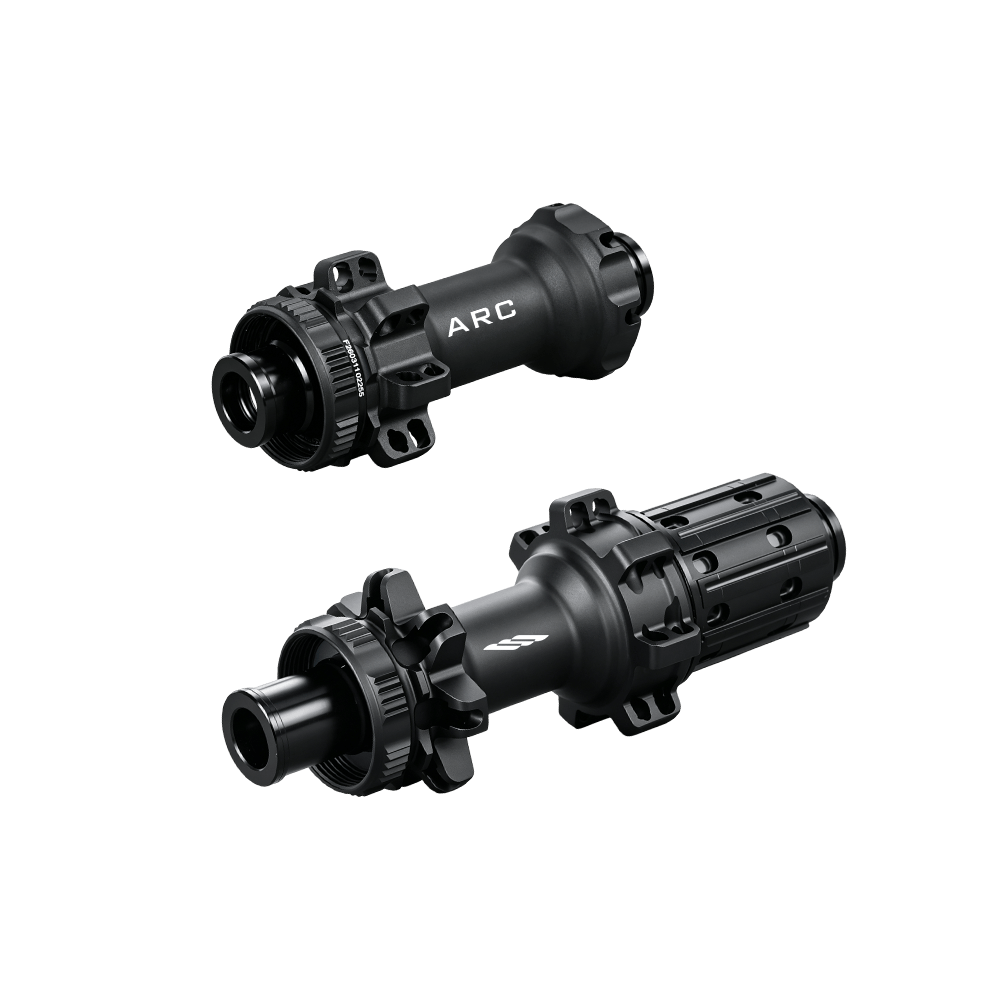
The ARC MT-009F/R Boost Center Lock MTB Hub Set provides a practical example:
| Specification | Configuration |
|---|---|
| Front Axle | 15×110mm |
| Rear Axle | 12×148mm |
| Brake Interface | Center Lock |
| Spoke Type | J-Bend |
| Spoke Holes | 28H / 32H / 36H |
| Freehub Options | Shimano HG / MS / SRAM XD |
| Hub Shell | AL6061-T6 |
| Engagement | 6-pawl, 3-tooth system |
These details help buyers determine whether the hub meets their MTB wheel requirements before requesting samples.
8. What Should OEM Buyers Confirm Before Ordering?
Before purchasing bicycle hubs for production, verify:
- Frame and fork axle compatibility.
- Cassette and freehub interface.
- Brake rotor mounting standard.
- Spoke count, type, and rim compatibility.
- Engagement system and bearing configuration.
- Required testing, sample approval, and customization specifications.
For bicycle brands and wheel manufacturers, a complete technical specification should form part of the purchasing and quality approval process.
Conclusion
Reading bicycle hub specifications is fundamentally about confirming compatibility and mechanical suitability.
Rather than comparing individual numbers in isolation, professional buyers should evaluate axle dimensions, drivetrain interfaces, spoke configurations, braking systems, and engagement designs as a complete wheel system.
ARC provides bicycle hub solutions for OEM and custom wheel projects. Buyers can also review the ARC MTB hub range to compare available configurations and discuss technical requirements before production.